Description
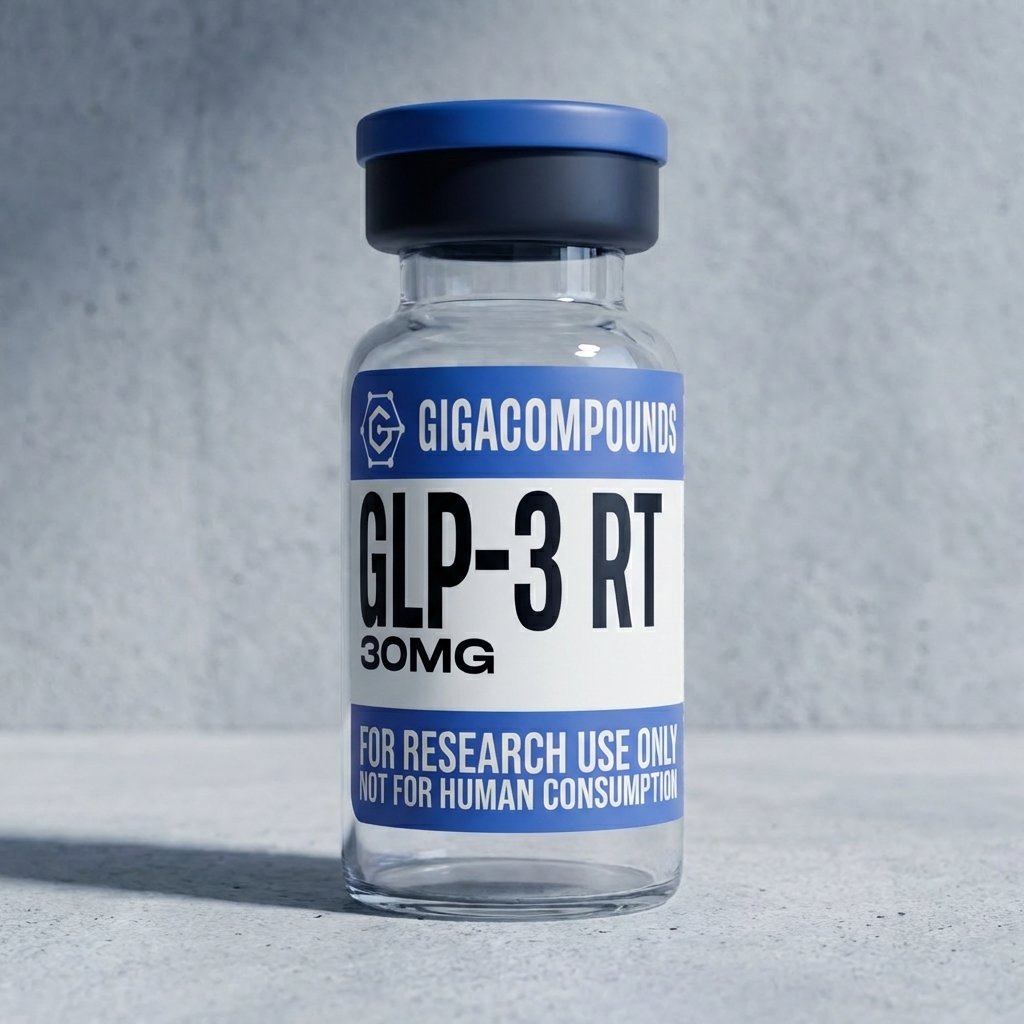
GC-3 RT (Retatrutide) 15mg and 30mg: Research-Grade Product Monograph
Key Points:
- Retatrutide (LY3437943) is a highly engineered, unimolecular triple-agonist peptide targeting the GLP-1, GIP, and glucagon receptors.
- Available as precisely calibrated 15mg and 30mg lyophilized powder formats to support diverse in vivo and in vitro research models.
- Research suggests that the simultaneous activation of these three distinct metabolic pathways provides a compounding, synergistic effect on energy expenditure and lipid metabolism.
- This compound is strictly designated for Research Use Only (RUO) and is not intended for human or veterinary diagnostic or therapeutic applications.
Overview:
GLP-3 RT (Retatrutide) represents a significant advancement in incretin-based pharmacology. While early metabolic research focused heavily on mono-agonists (GLP-1) and dual-agonists (GLP-1/GIP), the evidence leans toward tri-receptor agonism offering a superior physiological reset for complex metabolic dysregulation. By incorporating glucagon receptor activity, this peptide addresses interconnected metabolic challenges, including aberrant lipid storage and suppressed thermogenesis.
Regulatory and Safety Statement:
It seems likely that the multi-target nature of this peptide will make it a cornerstone in future preclinical obesity and hepatology research. However, investigators must adhere to stringent laboratory safety protocols. The product is meticulously verified for structural integrity but remains strictly RUO.
Product Description and Chemical Specifications
Retatrutide is a synthetic 39-amino acid peptide engineered upon a modified glucose-dependent insulinotropic polypeptide (GIP) backbone. To prevent rapid enzymatic degradation and extend its pharmacokinetic half-life, the molecule features several critical structural modifications.
| Parameter | Specification |
|---|---|
| Nomenclature | Retatrutide, LY3437943, GLP-3 RT |
| Molecular Weight | ~4731 Da (4731.33 g/mol) |
| Molecular Formula | C221H342N46O68 |
| Amino Acid Sequence | YA¹QGTFTSDYSIL²LDKK⁴AQA¹AFIEYLLEGGPSSGAPPPS³ |
| Formulation | Lyophilized white powder (15mg and 30mg vials) |
| Purity | >99% (HPLC and Mass Spectrometry verified) |
Structural Modifications
The peptide’s extended durability and unique receptor profile are driven by non-standard amino acid substitutions and advanced acylation:
- Aib at positions 2 and 20: The substitution of α-amino isobutyric acid (Aib) profoundly increases resistance to cleavage by Dipeptidyl Peptidase 4 (DPP-4), preserving the peptide’s structural integrity.
- α-Methyl-L-leucine at position 13: This optimization fine-tunes the compound’s binding kinetics, maximizing GIP and GCGR activity.
- C20 Fatty Diacid: Conjugated at position 17 (lysine) via a gamma-glutamate-AEEA linker, this lipid tail facilitates reversible binding to serum albumin. This mechanism significantly slows renal clearance, extending the half-life to approximately 6 days.
Mechanism of Action (Tri-Receptor Agonism)
Retatrutide is defined by its highly calibrated tri-receptor agonism, designed to simultaneously engage the Glucagon-Like Peptide-1 Receptor (GLP-1R), Glucose-Dependent Insulinotropic Polypeptide Receptor (GIPR), and the Glucagon Receptor (GCGR).
- GLP-1R Activation: Engagement with the GLP-1 receptor initiates the cAMP/PKA cascade within pancreatic beta cells, driving glucose-dependent insulin secretion while concurrently delaying gastric emptying and modulating satiety signaling in the central nervous system.
- GIPR Activation: GIPR binding yields synergistic metabolic effects, strongly enhancing postprandial insulin sensitivity and lipid buffering, which complements the anorexigenic effects of GLP-1.
- GCGR Activation: The integration of glucagon receptor agonism stimulates hepatic lipid oxidation and glycogenolysis. Crucially, GCGR activation drives a marked increase in resting energy expenditure and thermogenesis, accelerating the mobilization of deeply stored visceral and hepatic adiposity.
Pharmacodynamics and Binding Affinities
The molecule exhibits distinct binding affinities that prioritize GIPR engagement while maintaining potent efficacy at the GCGR and GLP-1R. The calculated dissociation constants (Ki) for human recombinant receptors confirm its potent unimolecular properties.
| Target Receptor | Binding Affinity (Ki, Human) | EC50 (Human) |
|---|---|---|
| GIPR | 0.057 nM | 0.0643 nM |
| GCGR | 5.6 nM | 5.79 nM |
| GLP-1R | 7.2 nM | 0.775 nM |
Research Applications
GLP-3 RT is a vital investigative tool for researchers examining severe metabolic disorders. Its primary research applications include:
- Metabolic Research and Obesity Models: Utilized in diet-induced obesity (DIO) murine models to measure synergistic reductions in body weight, fat mass, and caloric intake resulting from simultaneous incretin and glucagon pathway activation.
- Hepatic Steatosis Models: Deployed in the study of Metabolic Dysfunction-Associated Steatotic Liver Disease (MASLD) and Steatohepatitis (MASH). Research indicates that Retatrutide drives profound defatting of the liver (reducing hepatic triglycerides and inflammatory markers) in fructose-binge and dietary-induced steatohepatitis models.
- Cardiometabolic Syndrome: Investigated for its potential to improve lipid profiles, lower systemic inflammation, and enhance vascular health independent of weight loss.
Storage, Preparation, and Purity Standards
To ensure optimal stability and experimental reproducibility, GLP-3 RT is supplied as a sterile lyophilized powder. It should be stored at -20°C in a desiccated environment prior to reconstitution. For in vitro and in vivo assays, researchers should reconstitute the peptide using sterile bacteriostatic water or a compatible buffer (such as DMSO or CMC-Na, depending on assay requirements), gently swirling to prevent mechanical shearing of the peptide chain. The product guarantees a purity of >99%, vigorously verified via High-Pressure Liquid Chromatography (HPLC) and Mass Spectrometry, ensuring the absence of truncated sequences or residual solvents like Trifluoroacetic acid (TFA).
Selected PubMed Citations
The underlying pharmacology and clinical translation of Retatrutide (LY3437943) are documented in the following highly regarded peer-reviewed publications:
- Jastreboff AM, Kaplan LM, Frías JP, et al. Triple-Hormone-Receptor Agonist Retatrutide for Obesity – A Phase 2 Trial. N Engl J Med. 2023 Aug 10;389(6):514-526. PMID: 37366315.
- Sanyal AJ, Kaplan LM, Frias JP, et al. Triple hormone receptor agonist retatrutide for metabolic dysfunction-associated steatotic liver disease: a randomized phase 2a trial. Nat Med. 2024 Jul;30(7):2037-2048. PMID: 38858523.
- Coskun T, Urva S, Roell WC, et al. LY3437943, a novel triple glucagon, GIP, and GLP-1 receptor agonist for glycemic control and weight loss: From discovery to clinical proof of concept. Cell Metab. 2022 Sep 6;34(9):1234-1247.e9. PMID: 36067756.
Sources:
1. [oup.com](https://vertexaisearch.cloud.google.com/grounding-api-redirect/AUZIYQGYGLJtq7QJcleYonzj-E2kbxpy-IQmZusH4O0G0U5OmeHChw-bZWzA0chog4X39TqqOkS9VPVRDgKK-TRJkb1Ca51nD3-v_RxmhXGX6r2ofPb-7T5-mrS7q5ZhYUnPdG_pU1KcbJOSNxcKPLOZTtU=)
2. [selleckchem.com](https://vertexaisearch.cloud.google.com/grounding-api-redirect/AUZIYQFmOR526TzNkMf9MYYbHp8u5TtR-H-Nmm6bcsSludBVDlLIMqKZVXgZ3kqo4L7PxdhBLtxWbDBHIhUyUm3U2zQWuFwdRLOKwBrbl0BIIQFtLxXb_QpgfuajdhmJ9hTBlSCvklI5g9wJ-Ma5)
3. [biocat.com](https://vertexaisearch.cloud.google.com/grounding-api-redirect/AUZIYQE3LBdnmLNXSi5lgHskVFDS1ib2lUAWMRXkfD78atK-Dm-ZNx8zAS4yWneoo21NIlOtIYuCBb_zymj5GG-55RHZbmIhFBaUzLbTvF2wo4DqySt0Hk6OtHHFL3APmVzPhPq2WiBDmUADjngz_UwRTII=)
4. [profoundaminos.com](https://vertexaisearch.cloud.google.com/grounding-api-redirect/AUZIYQHDRsKK5sfxCvLYLEAwA1P1fpZHqpqrS9Qy1tie3BK_K99O6tAVCzZwWCJFPgdDui7pn0WFvRVf719V6-5VjZ7w4NXhnEL2W0hGpYbTwRs6x9I513JMEwhyXb9LhJI5STVdubBoLZnwTtxRW7A=)
5. [polarispeptides.com](https://vertexaisearch.cloud.google.com/grounding-api-redirect/AUZIYQE-C8GVvetllLfPgG6sK_uJdAD8MwsdREkJn87KxZRnAXuwG5D-Gn1pNxR7VJ04QthjNhBCjZOvKceIvrW3tt1Snchyx9l-brZhfTxYEPSQIPG8AHB88w1D1dkgWUskQAu2xA==)
6. [nih.gov](https://vertexaisearch.cloud.google.com/grounding-api-redirect/AUZIYQHHh2ssMC4kQ36ZxqvTkH5pYCmNVEIqmLfiI8llO2ozv8zhTU0CNGO75OVoZpc7z4DFINxEWO9ZwWgkvSqZylVNYuVnDv_2_7xUiXyaOa4629iie5eUgOxVojD6W2TG9jQ7VIQeCEq70Q==)
7. [realpeptides.co](https://vertexaisearch.cloud.google.com/grounding-api-redirect/AUZIYQEZgP2Txgw58wZJzAoYGlafUEcPUvV099h4DT-c0t0CH4oebe6c5mMApFfezgDRD6-GSx456Z_tLcSa4o6duUQk6zcMAGHyMNN64uHFKvNmu3J0U7BYUWrfvfbmJEYR0vNfon6eNNTksb0=)
8. [medchemexpress.com](https://vertexaisearch.cloud.google.com/grounding-api-redirect/AUZIYQHiCyqdqmM9EBR0FwwiAcMrigXVRqB7jeR4L2lpbjo1b38uRLMLOXyiC-zRp8qnji6eo8ZLHxQjSZ4gclZkI8d557FVpTjXAt-bWsD5DsbuXOkewHdZ21_G0Wviv2PxhDeJmpsFAA==)
9. [nih.gov](https://vertexaisearch.cloud.google.com/grounding-api-redirect/AUZIYQFYhh3mRtIJJYgGPLAA_ZylaKbHFaTTXsVPn3ZgOyRfsTee6BDtdjsBOtzH6nSYgNPjfHDUdLWOr5Fv1NuxJO0lenKY6XhI-0kg3vD8uxEYDSXdO5tKqgHWbpIHFeszwbvlBEOP7qNRRQ==)
10. [exploring-peptides.com](https://vertexaisearch.cloud.google.com/grounding-api-redirect/AUZIYQGUGjCkjHPYjF5TQOHhXDJ7NFlNHdjEab8-5aS7dLS06O7Ozk3Wm9PO_eeR7zLwAbeYL6O8TZP-_6yXGYsdBvOqaft4VujhqNX3lvIUfZdrdwg5eqYBVf6siTxqGio6L3W-z5pbCQkfdVfTGr-5u3rkBiZN)
11. [peptidesindex.com](https://vertexaisearch.cloud.google.com/grounding-api-redirect/AUZIYQEO229N4Pcwbo6IewXyRaNwa6c3QA5ARwHJFE9QtOs2oB2OdZYjpR3ygp_IF7mHptSXZXG3QP64D59v2z_YXsZVVov9sUpV83BLt-9ZXKJSoplYZmZAj7LrSbn_5GAVeEZjjLCX)
12. [wikipedia.org](https://vertexaisearch.cloud.google.com/grounding-api-redirect/AUZIYQHoVisQFGFq0ebPRXNnhg98JjnqrJxzq9l3u5l5VgUERCGRQRSdyncSFay9ouEX7a9qnaThqWwjjuka8_19yCQJzdzFEzM3khyCCpJIQ0hsW0dehFXsp0dQCja48EhBkA==)
13. [skyhealthnv.com](https://vertexaisearch.cloud.google.com/grounding-api-redirect/AUZIYQFQEeow-cxdBrdy2Yfmx7uW8Tz0qMjw0q_-LCEdu-YZ029a_kwaa8xQn9wMFAIa7yIUuv1xM3RFhqS87VupMO-ixEtHtb_M0pjPRaBrSDVwVwrED1evuJkcchRzJhrLlbFYjtVwA2WHRBjULQ==)
14. [invivochem.com](https://vertexaisearch.cloud.google.com/grounding-api-redirect/AUZIYQHIGzRWllUZct825YMWeW1sAjdguyiQ70uO4KWJghfY4B0k7-OcndcV-8lRdzuBIjGAQOPd8ppa5nONagBqL4AMJuthF08r_EOaEfsCrZa-KoX88TI_RZFPb1lVn5UozA==)
15. [nih.gov](https://vertexaisearch.cloud.google.com/grounding-api-redirect/AUZIYQFRFATFkn8_fBWFGvWv8IxLJOeLiE0XTvZ-d4M0Wad448-29rqsU8RDkkMn2UF_e4-SHktemVrWPa7hFhE2J7zvAkHg55_HJUElt3WgJPVQEJXUpXQ6RUgyeW3fdGJd0A==)
16. [researchgate.net](https://vertexaisearch.cloud.google.com/grounding-api-redirect/AUZIYQE58BVCmJJC0Zz2JJJZ9atmKwCHjF0lgHK9hI5LRn_uguo9NS8dHGZ4xczlLBlzkRE30KCpHwRWg7jAkaD2ohAlXF_78w4CmUCv-esP6Hr4ldQmowgj0MHlYjBraEGX2tJQqszZLiarHLyewRuDj53ieWys9EywQwjwjEM4v9pkf7b97xVhk-rlqnhr92ar8ri_buqTL8qizDPwYuo9c9kTNJiUIEuk3Sq9zS-I7y6jt6Pqid2LA3JG-MXeepyQQ7jOKg8FWZVxanyKc2jeEgVocQNsE9far7ndGKC298djzUOK3CEafXcJxl3C_ZXyCNsEFBLVZBQGYPMWtg==)
17. [nih.gov](https://vertexaisearch.cloud.google.com/grounding-api-redirect/AUZIYQEfujtaeyThVsBElYA2NjOTtc7u7CYLYFjI2j1L9BoKH-Wyqwf4NChoTsp8FCTXjI2XEBZDyLKX1RpcQAFXo9jeDYcdsJMi2i_Dum5XSF2uPZ1WV5nLSMmnRqAh-G8lKQ==)
18. [researchgate.net](https://vertexaisearch.cloud.google.com/grounding-api-redirect/AUZIYQGKeFf6rhNBsSYp0A3sS10Ua6cAXRpoHBE2pHvz2ChPaWmEYk-uZXMU_Nzzt1JnxRFqAhXx-MhkQ1lR_OZxeCyjtjE2_A71aqDvhGqx16PJyB4y7cKWU1S4ASTkIdWr0rARS_HC7Mf-aA2LNrPdvHeml6X9CXSPrPiwjdUhsXXxRgSULn-n86hq0p38ryH2wnnN62MeJ1S1dsVetTqjVJb2NAfsM9vzMZeb42qE0_-ov8NET52eQOlOAA4LjRZjpDx1byBDxxjWJaYNARr_xDAzckY_U4fOO11Ko8bDqhv1tqZAyOyjK-U4dlNTxATgBVH6Qd9WjYYJvZTu8U7IAnQ8Xwqgs2YMgeTZz3BwRXjwhB9n5-YKR3IGHbTb6P2y004aUA==)
19. [nih.gov](https://vertexaisearch.cloud.google.com/grounding-api-redirect/AUZIYQE9D3bDpIU6eLgM7cFgkJcPcGGyFiBoCoUBjFANGBxNO–9oqGUbxN8QXJr3DytEuLWqoi3wqNNFa9g9yRwBByb2HzegnhXTkDQAojyquqFddYLeLatxkRNul3HRKhAKA==)
20. [chemscene.com](https://vertexaisearch.cloud.google.com/grounding-api-redirect/AUZIYQFy-wehpqLdbry7Szdssc_TrgywFWI7J4qtpczJrZvr9A-ZmbzcHCHL4Ys7P9GL92kgwSIUNOKTL4ppnhsLHA3aS-J-3G9tMuoZvQ9eXurVx0ToB_VSr-ecjdHwnKwX9mq78nFbalgegKorgH5SEdwk2TXVPXVO)

Reviews
There are no reviews yet.